SkiStar Bike Park – lift assisted mountain biking
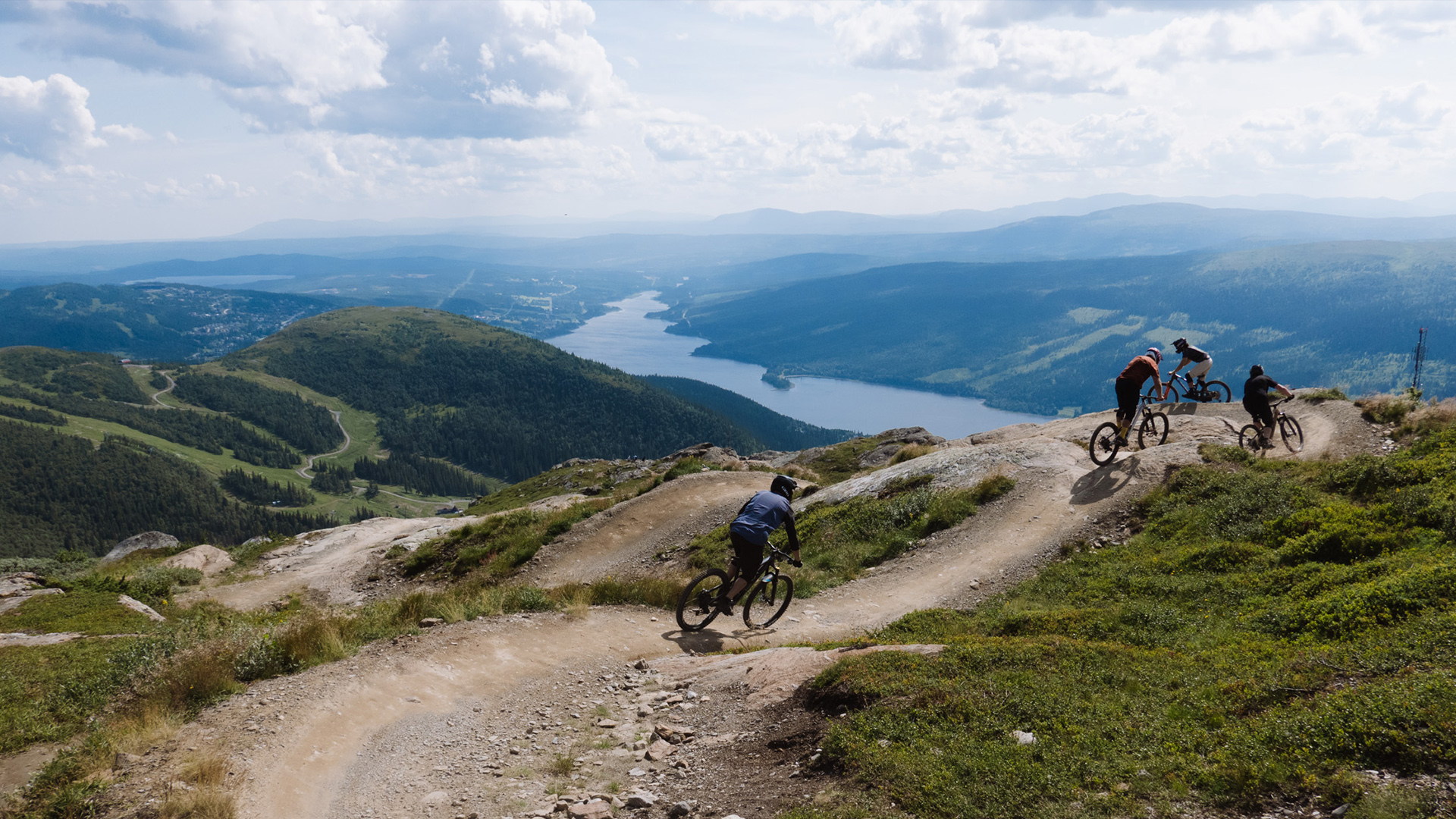
Experience speed, flow and excitement with lift assisted mountain biking in SkiStar Bike Park. Take the lift to the top and ride down purpose-built trails with berms, jumps, technical sections and fun challenges along the way.
On this page
- What is SkiStar Bike Park?
- Our Bike Park destinations
- Different types of Bike Park trails
- Equipment and protection
- Getting started at the right level
What is SkiStar Bike Park?
SkiStar Bike Park is our area for lift assisted mountain biking. You take the lift to the top and ride back down on purpose-built trails designed for different skill levels.
Compared with traditional trail riding, Bike Park riding often offers more vertical descent, larger features and longer downhill runs.
It is all about gravity riding, with minimal pedalling and maximum fun on the descent.
SkiStar Bike Park at our destinations
SkiStar Bike Park is available at several of our destinations and offers unique experiences, from family-friendly flow trails to advanced gravity lines.
Lift assisted mountain biking in the mountains
Lift assisted mountain biking offers a unique sense of freedom. From the top of the mountain, long descents, berms, fun features and varied terrain await.
Whether you want to cruise down wide trails or challenge yourself technically, there are lines and areas for a range of ability levels.
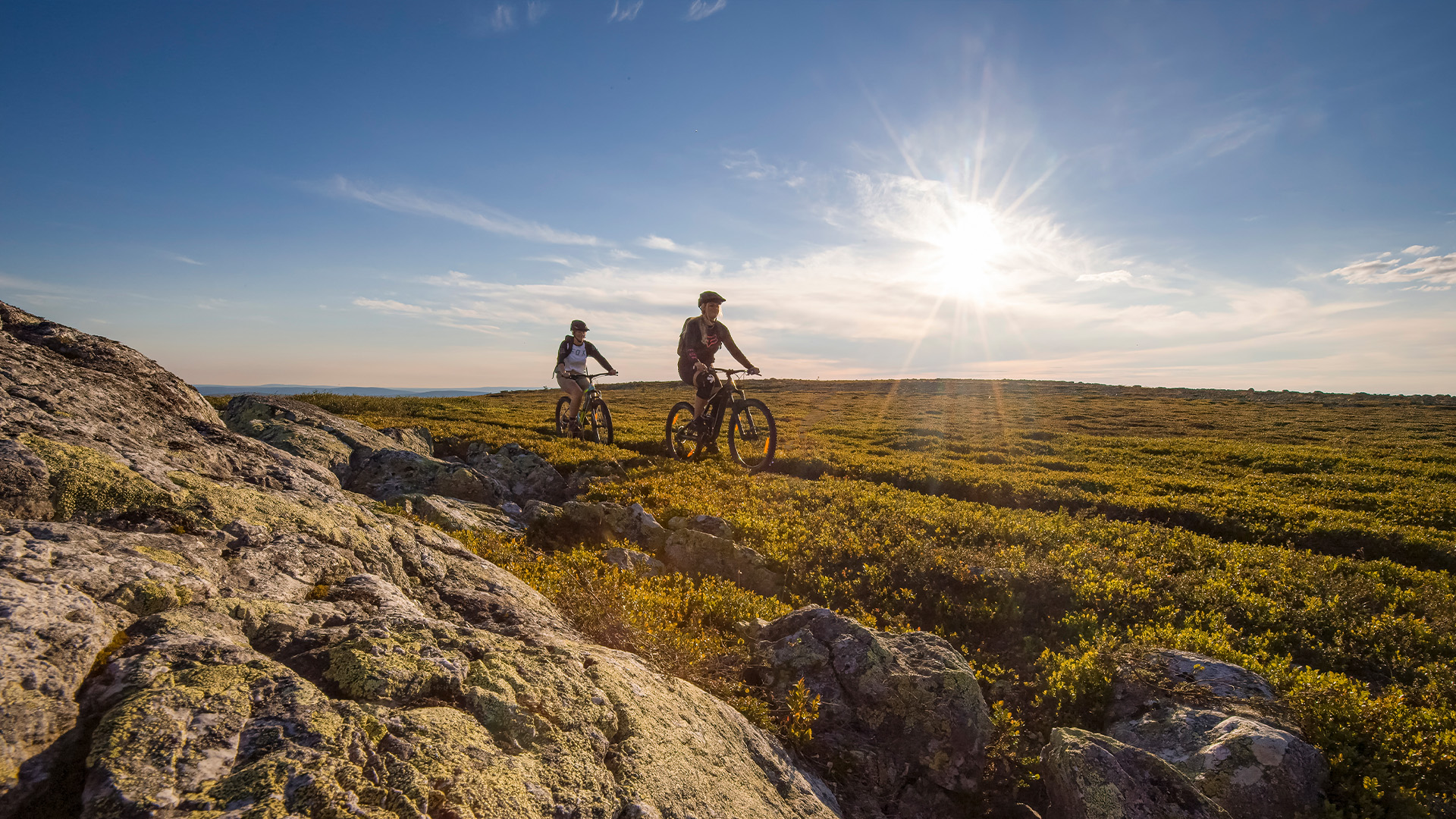
Many riders choose Bike Park when they want to take their riding to the next level after becoming comfortable with regular trail riding.
SLAO’s Lilla Gröna – Important information about lift assisted biking
Before you head out on the biking trails, it is important that you know the biker’s rules.
The rules are there to help bikers ride safely, show consideration and reduce the risk of accidents.
- Good technique reduces the risk of injury – use a guide or instructor.
- The biking school may have priority in certain lifts.
- A well-maintained bike makes biking safer, easier and more fun.
- A helmet is compulsory when biking.
- Deter thieves by locking your bike, even out on the trails.
- Be aware of the risk of dropping your bike and other equipment when using chairlifts.
- Fatigue increases the risk of accidents, so build up your fitness and strength before the season.
- Show extra consideration for children, who often make quick and unexpected movements.
- The bike patrol and trail staff work for your safety and wellbeing.
- If you lose each other in the lift area, contact the staff, who will be happy to help you.
The difficulty grading of biking trails is set by the facility and indicates the level of skill a biker should have to ride a specific biking trail safely and confidently. For example, some trails may be machine-built while others are natural trails.
Biking trails are for biking only; hikers should use hiking trails. Trails marked with downhill symbols are open for biking.
- Green – Easy biking trail
- Blue – Intermediate biking trail
- Red – Advanced biking trail
- Black – Expert trail for biking
- Purple – PRO trail or extreme trail for biking
The grading of biking trails in SkiStar Bike Park applies to lift assisted biking and is not comparable to trail riding.
On the trail descriptions page, you can read more about what green, blue, red, black and purple biking trails mean.
Read more about trail descriptions for lift assisted biking
Flow trail
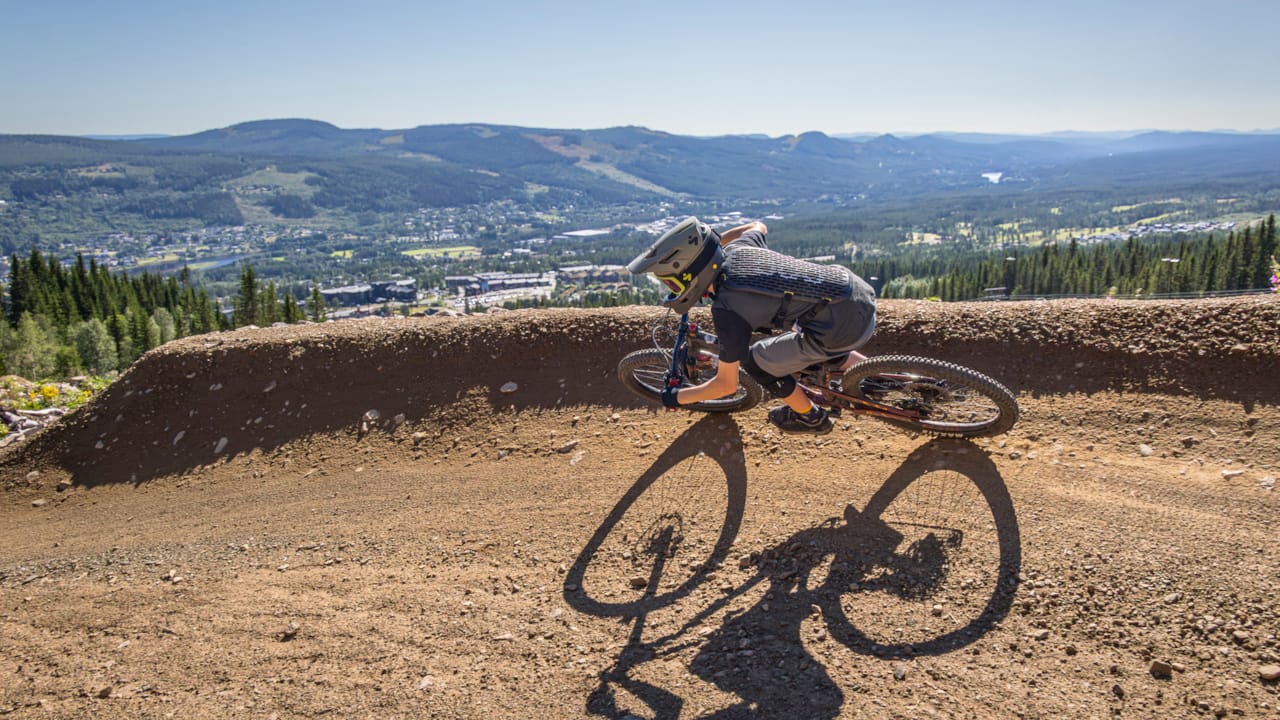
Flow trails are built with a smoother and usually wider surface and have a high proportion of berms, jumps and rollers. Speeds are higher than on natural singletrack trails.
Technical trail
Technical trails have rougher and more natural surfaces with a high proportion of natural or organic elements; rocks, roots, drop-offs and steeper slopes. Speeds are generally lower than on flow trails.
Mixed trail
Mixed trails contain a combination of both singletrack and jumps. Sections with berms are combined with more technical biking to create varied biking trails.
Plus trail
Plus trails have a high frequency of advanced features, such as jumps, drops or gaps. These require or actively encourage the biker’s wheels to leave the ground. Without good jumping ability, these trails will involve a consistently higher level of risk. The trails are colour-graded as usual to indicate the level of challenge posed by the jump and drop features. The colour of the plus symbol relates to the gradient of the trail. Only bike on trails with a suitable difficulty level for your ability. Standard-graded trails may contain some of these features, but not with the same frequency, scale or focus as a plus-graded trail with '+'.
Look out for the + symbol on trail maps and name signs to help you decide whether the trail is suitable for you.
- Always follow the facility’s instructions for how to use the lift.
- Do not wear loose-hanging scarves, cords, straps or similar items that could get caught in the lift or equipment.
- Boarding and disembarking may only take place at designated areas.
- Leave the disembarking area immediately.
- It is not permitted to stay in the area between the disembarking point and the return wheel.
- Persons under 125 cm may not ride a chairlift unless accompanied by a person over 140 cm.
- Do not swing the chairlift seat.
- Never jump from the chairlift seat.
- Do not litter in the lift or on the biking trails.
- Damaged or lost equipment is generally not compensated.
- The lift pass may not be used by anyone else without the facility’s approval.
- When checked, the biker must be able to show the lift pass and prove that they are the correct holder.
- Lift-accessed biking means all biking that takes place within the facility’s biking trails.
- Lift-accessed biking is a sport that may involve risks for the participant.
- Carelessness when lift-accessed biking may result in liability for damages.
- An upside-down bike on the biking trail indicates an accident.
- The facility is only responsible in accordance with the safety regulations during and in connection with the lifts’ normal opening hours.
- The facility’s biking trails may not be accessed outside opening hours without permission from the facility.
- The facility’s terrain vehicles and other vehicles may be present on the biking trails, even during opening hours.
- Weather conditions and trail surfaces can deteriorate so quickly that risks increase, even on marked biking trails.
- Lift-accessed biking outside marked biking trails is prohibited.
- For safety reasons, lift-accessed biking should be practised together with others.
- Lift-accessed biking is not permitted on closed trails.
- Easy trails are considered low-speed trails.
- Trails, tracks and jumps may not be built or constructed without permission from the facility’s responsible staff.
- Competitions and competition-style training may not be carried out without permission from responsible staff.
- Competitions and competition-style training must take place separately from general biking.
- Notify staff if you discover any obstacle, danger or accident in the lift or on the trails.
- Removing nets and protective padding may result in a police report.
Different types of trails in Bike Park
At SkiStar Bike Park you will find several different trail types. Some trails combine multiple elements, but most have a distinct riding style and character.
Flow trails
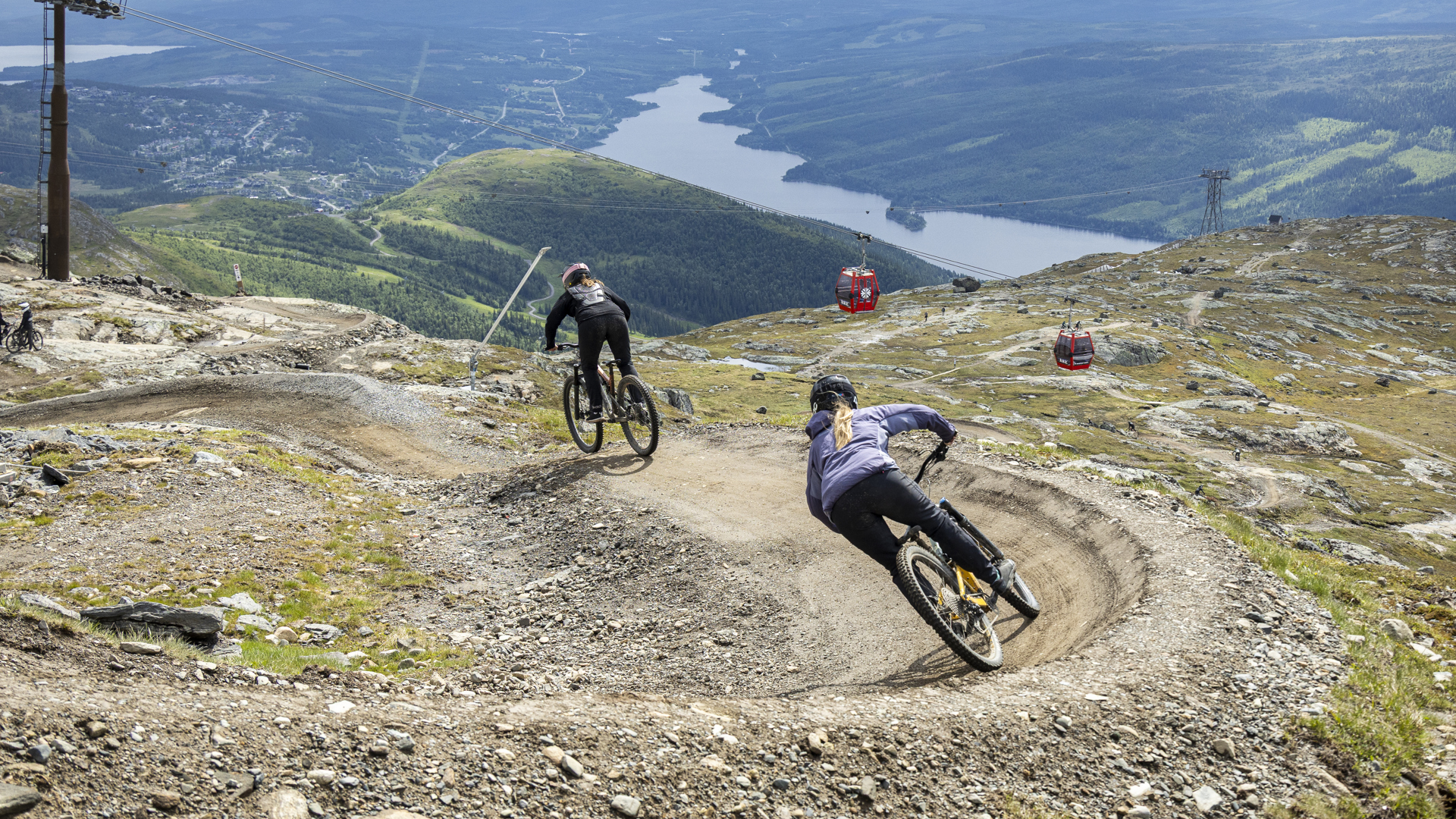
Flow trails are designed for speed, rhythm and progression, with berms, smooth surfaces and a riding experience that flows naturally from top to bottom.
Freeride trails
Freeride trails often include jumps, drops and other built features that create a more playful, challenging and action-packed descent.
Technical trails
Technical trails typically feature roots, rocks, uneven terrain and more demanding sections that require greater balance, control and technique.
Downhill
Downhill is the most dedicated and demanding form of lift assisted mountain biking, with steep, fast and technically challenging tracks for experienced riders.
Equipment and protection
The right equipment makes the experience both safer and more enjoyable, while giving you better control as speed increases and terrain becomes more demanding.
Bike for Bike Park
For the best possible experience, we recommend a full suspension bike designed for Bike Park and lift assisted mountain biking. These bikes are built to handle rougher terrain, bigger impacts and repeated downhill runs.
Protective equipment
We always recommend using additional protection in Bike Park, as speeds and impacts are often greater than during normal trail riding.
- A full face helmet provides extra protection for your head and face.
- Knee pads and gloves improve comfort and confidence.
- A back protector can help reduce the risk of injury in the event of a fall.
If you do not have your own equipment, you can easily hire modern bikes and protective gear at our destinations.
Getting started at the right level
Although Bike Park riding offers speed and excitement, you do not need to be an expert to give it a try. The most important thing is to start at the right level and build your skills gradually.
Start easy and build confidence
If you are new to lift assisted mountain biking, we recommend starting on easier flow trails and getting familiar with the bike, terrain and trail design.
It is beneficial to feel comfortable on at least blue trails in SkiStar Trail Park before progressing to Bike Park.
Get help from an instructor or guide
Our instructors and guides can help you improve your technique, confidence and flow on the bike. This is perfect for beginners as well as riders who want to progress faster.
If you are completely new to the sport, we also recommend our guide to getting started with mountain biking.